Subconscious reprogramming
Can’t switch your mind off? Subconscious reprogramming, explained gently
Plain English, no stage-show tricks and no promised results. You learn what it is, try a guided session at your own pace, and stay in charge the whole time.
What the subconscious is, in plain words
Plainly put
Can hypnosis make me do things?
The subconscious is the part of your thinking that runs in the background: habits, automatic reactions, the story you tell yourself at 2 a.m. You do not choose those thoughts one by one, which is why they can feel stubborn.
In hypnosis education, “reprogramming” means something modest. You relax, you listen to calm, repeated suggestions, and you gently practise a different way of responding. It is closer to rehearsing a new habit than to flipping a switch.
Hypnosis itself is a focused, relaxed state, a bit like being absorbed in a book. A trance is that same state. Nothing is done to you; you take part, and you remain able to hear, think and decide.
What it does
- Teaches you how hypnosis works, before you try anything.
- Guides you into calm with audio, video and music.
- Gives you scripts and training to practise by yourself.
What it does not do
- Cure, diagnose or treat any condition.
- Promise a result or a timeline.
- Control your mind. You stay aware and can stop at any time.
How a guided session goes
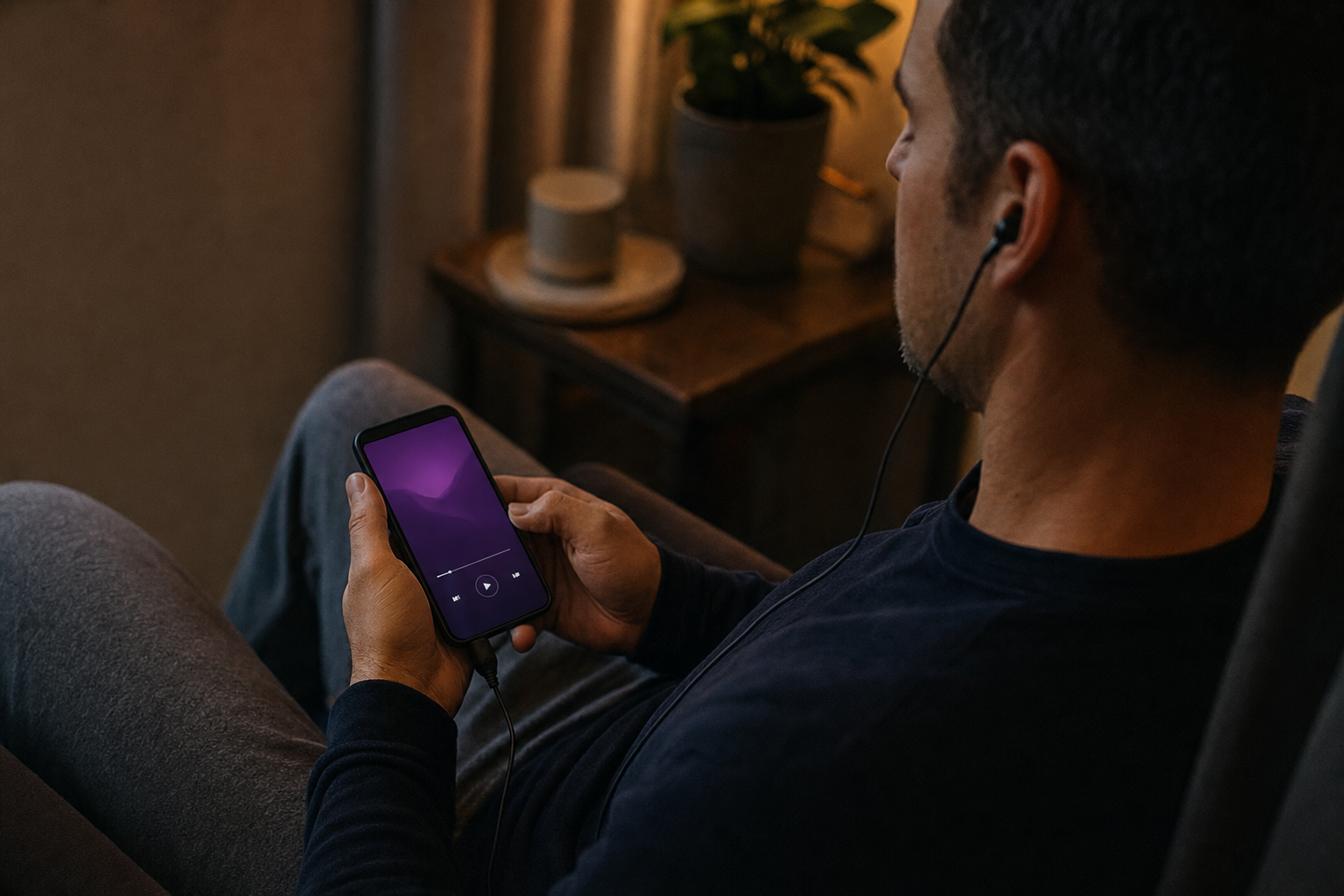
Find somewhere quiet where you will not be disturbed, and sit or lie down comfortably. Headphones help but are not required. Press play on a guided hypnosis audio or a guided meditation video.
A calm voice invites you to follow your breath, soften your shoulders and let your attention settle. Suggestions are short and simple. If your mind wanders, that is normal; you just come back to the voice.
Pause whenever you need to. If you fall asleep, that is fine, especially with sleep hypnosis. Sessions come as single recordings or in series of one, two, three or more, so you can start small.
Illustration only. Your sessions never start on their own.
Scripts and practising at home
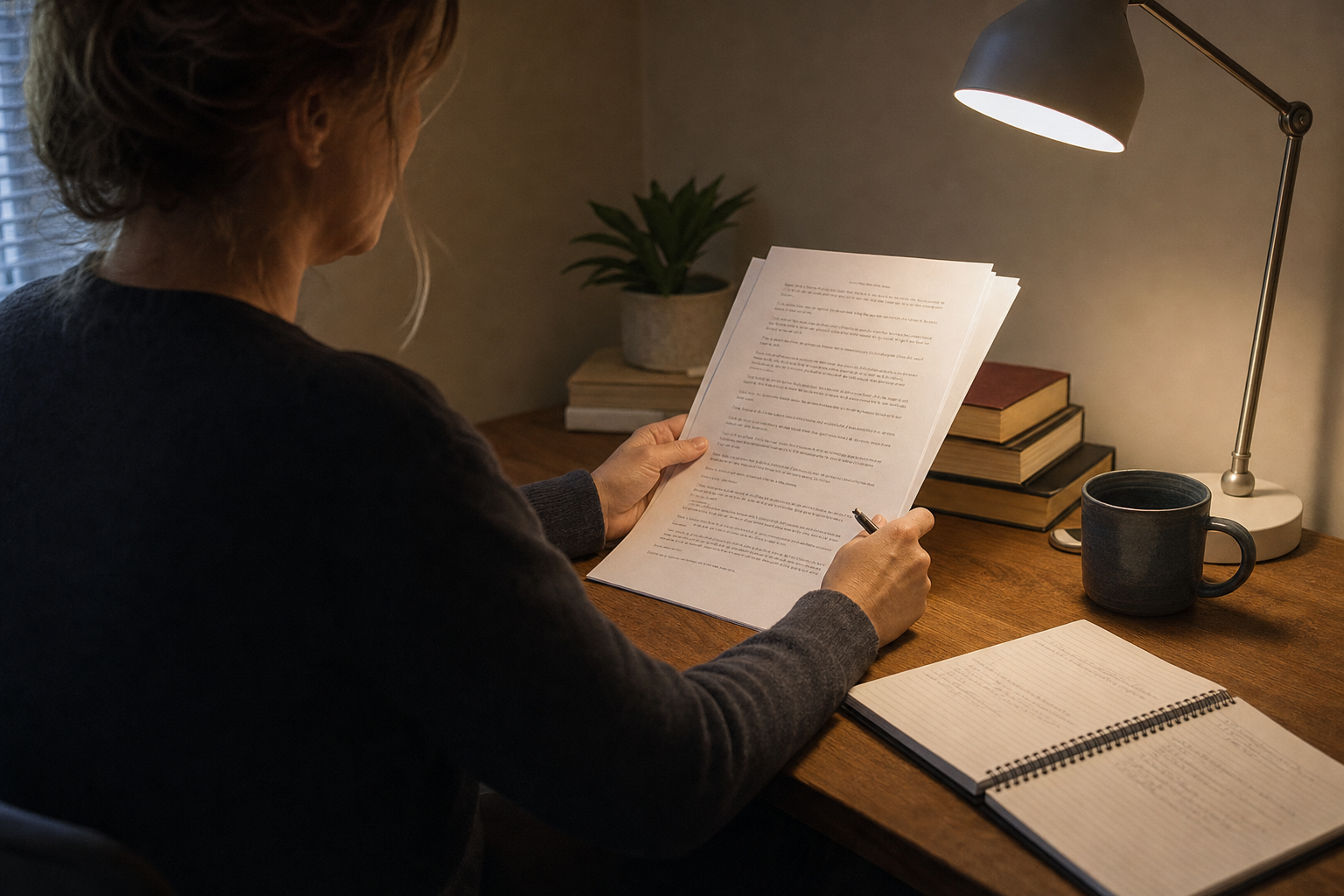
A hypnosis script is simply the words a session uses, written down. Reading one lets you see how suggestions are built: slow pacing, positive wording, a gentle start and a clear finish.
You can record a script in your own voice, ask a friend to read it, or follow it silently. Self-hypnosis training shows you how to guide yourself in and out of a relaxed state, and a short practice most days tends to feel easier than an occasional long one.
Ask about course options and costs when you get in touch; nothing is priced here that has not been confirmed.
Who tends to try it
People who want calmer habits of thought: stressed professionals, students before exams, people managing anxious thoughts, athletes, caregivers, new parents, coaches, and anyone lying awake. Curious beginners are very welcome.
It is a relaxation and learning tool, not a substitute for professional care. If you are worried about your health, speak to a doctor or a qualified hypnotherapist; the therapist directory can help you find one.
Questions people ask
Is it safe?
Guided relaxation is gentle, and you can stop at any time. It is not a treatment, and it does not replace medical advice.
How often should I practise?
There is no required schedule. Many people choose a short session on most days; listen to how you feel and adjust.
What if I fall asleep?
That is fine and common, especially in the evening. Your body still gets the rest.
Will I lose control?
No. You stay aware of where you are and can open your eyes or pause whenever you choose.
When should I see a hypnotherapist instead?
If you want personal support, or have a health concern, a professional is the right step. Our directory helps you find one.
What does it cost?
Ask when you get in touch. Prices depend on what you choose, such as a single recording, a series or a course.
Start when you are ready
No pressure and nothing to sign up for tonight. Reach out with a question, or call (602) 899-0011. This is an online service; there are no visits.
Also see all our services.